The 12 Best CRO Tools for E-commerce Brands in 2026
CRO (Conversion Rate Optimization) covers all the strategies and tactics used to improve an e-commerce website’s conversion rate.
And there are many levers to pull: understanding visitor behavior, testing different versions of a page, improving product presentation, building trust at the point of purchase, or personalizing the customer experience.
Today, there are tools for each of these needs, ranging from free software to platforms built for large enterprises.
Here’s our selection of the 12 best CRO tools for e-commerce brands in 2026, organized by use case and compared based on the types of businesses they’re best suited for.
What Is a CRO Tool?
A CRO tool helps improve an e-commerce website’s conversion rate—the percentage of visitors who complete the desired action, usually making a purchase.
In practice, no single tool covers every aspect of CRO. Some help you understand why visitors abandon a page. Others let you test new versions, improve product presentation, or build trust before purchase.
A CRO stack can therefore include several complementary tools:
- Analytics and heatmaps to understand visitor behavior;
- A/B testing to measure the impact of changes;
- Video and visual content to showcase products more effectively;
- Customer reviews to build trust;
- Chat and customer support to address last-minute objections;
- Personalization and search to make product discovery easier.
The right tools will depend primarily on your traffic, catalog size, resources, and CRO maturity.
Comparison Table of the Best CRO Tools
UX Analytics and Heatmaps: Understand What Your Visitors Do
Behavioral analytics tools complement traditional quantitative data by showing how visitors actually interact with your pages: clicks, scrolling, hesitation, abandonment, and errors.
#1 - Contentsquare: For In-Depth User Journey Analysis
Contentsquare helps analyze visitor behavior through heatmaps, session replays, journey analysis, and interaction data.
Since 2025, Hotjar has been part of Contentsquare. The platform now covers needs ranging from small teams to the most advanced CRO programs.
Why it’s useful for CRO: identify the pages, areas, and steps creating friction, then prioritize the optimizations to test.
Best for: e-commerce brands that want to go beyond traditional analytics and understand exactly how visitors use their website.
Limitations: the most advanced features are primarily designed for teams that already have a structured CRO program.
#2 - Microsoft Clarity: For Getting Started With Behavioral Analytics
Microsoft Clarity is a free Microsoft tool that helps analyze visitor behavior through heatmaps and session recordings.
It also detects signs of friction such as rage clicks and dead clicks, making it easier to quickly identify problematic areas.
Why it’s useful for CRO: identify the most obvious friction points for free and understand where visitors hesitate, click, or drop off.
Best for: small stores and brands starting to build a CRO strategy without a dedicated budget.
Limitations: less advanced than Contentsquare for sophisticated analysis and mature CRO programs.
A/B Testing: Measure Before You Roll Out
A/B testing lets you compare different variations with your visitors and measure which one delivers the best results.
#3 - AB Tasty: For Marketing-Led Experimentation
AB Tasty is a French experimentation and personalization platform. Its no-code visual editor enables marketing teams to create and deploy A/B tests without systematically relying on developers.
The platform also offers segmentation and personalization features based on visitor behavior.
Why it’s useful for CRO: quickly test different hypotheses and measure their impact on conversion without turning every experiment into a technical project.
Best for: marketing and e-commerce teams that want to run tests regularly with a high degree of autonomy.
Limitations: less suited to highly technical or product-led experimentation.
#4 - Kameleoon: For More Advanced Experimentation
Kameleoon is a French experimentation and personalization platform covering both web A/B testing and more technical use cases, such as server-side testing and feature flags.
It is particularly suited to organizations where product and development teams are directly involved in the experimentation program.
Why it’s useful for CRO: test more complex changes and personalize experiences based on visitor characteristics and behavior.
Best for: companies with high CRO maturity, involved product and technical teams, and complex testing scenarios.
Limitations: more demanding to implement and use than marketing-focused tools.
Shoppable Video: Turn Content Into a Conversion Driver
On a product page, visitors may still hesitate before buying: What does the product really look like? How does it work? What will it look like when worn, installed, or used?
Video can answer questions that a few photos or lines of copy can’t always address. With shoppable video, content also becomes a direct path to purchase.
#5 - JOIN: Bring Video Directly Into the Shopping Journey
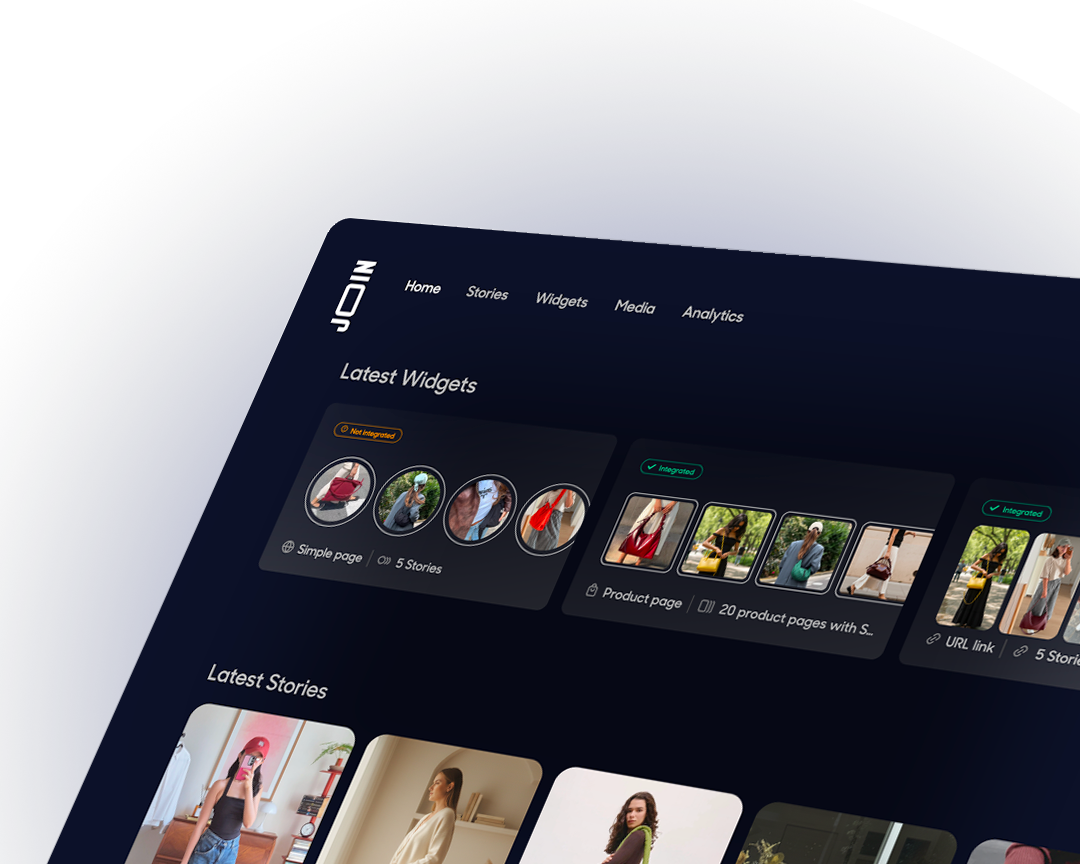
JOIN is a French video commerce platform that lets brands embed shoppable videos across product pages, homepages, and landing pages.
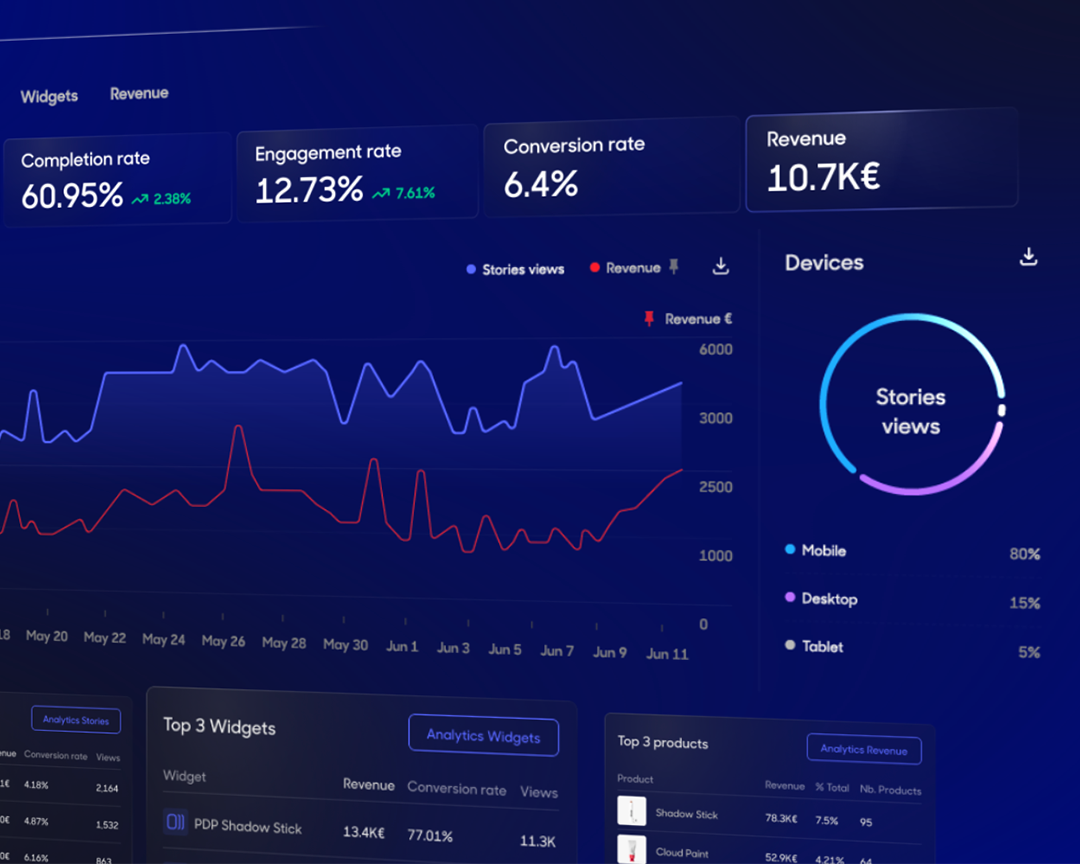
Visitors can discover a product through video, access its product page, or add it directly to their cart from the content. JOIN also measures video performance and helps identify which videos contribute most to engagement and conversion.
The platform also includes JOIN AI Studio, which lets brands create AI-generated video and visual content and publish it directly into shoppable experiences.
Why it’s useful for CRO: show products in context, address purchase hesitations, and shorten the path from content discovery to add-to-cart.
Best for: fashion, beauty, home, food, sports, and lifestyle brands, from Shopify stores to larger e-commerce organizations.
Limitations: less relevant for products that don’t lend themselves well to video demonstrations or real-life use cases.
AI Visual Creation: Improve Product Presentation
AI visual creation tools make it possible to improve or produce product visuals quickly, without organizing a photoshoot for every variation or channel.
#6 - Photoroom: Quickly Create Product Visuals
Photoroom is a French AI-powered product photography and image editing tool.
It can remove or generate backgrounds, retouch images, and adapt the same visual to multiple formats.
Why it’s useful for CRO: improve the quality and consistency of the visuals customers see as they discover your products.
Best for: small and mid-sized brands that produce much of their visual content in-house and want to speed up production.
Limitations: less suited to campaigns requiring highly specific art direction or premium photographic results.
#5 - JOIN (Again): Create Ready-to-Use Videos and Visuals With JOIN AI Studio
JOIN AI Studio lets brands generate AI-powered visual and video content directly within the JOIN platform.
Its main advantage is the connection between creation and distribution: generated content can then be integrated into video commerce experiences and deployed directly across the e-commerce site.
Why it’s useful for CRO: create more content that showcases products in context, then integrate it directly into the shopping journey.
Best for: brands looking to scale content production without multiplying photoshoots, particularly those with large product catalogs.
Limitations: for brand campaigns requiring highly specific creative production, AI creation remains complementary to traditional production.
Customer Reviews: Build Trust Before Purchase
A visitor may be interested in a product but still have doubts about its quality, sizing, appearance, or the reliability of the retailer.
Reviews bring social proof directly into the customer journey, allowing shoppers to compare the brand’s promises with the experiences of existing customers.
#7 - Avis Vérifiés: Build on an Established Third-Party Trust Provider
Avis Vérifiés enables e-commerce brands to collect, moderate, and display reviews of their brand and products.
The solution has a strong presence in the French market and allows reviews to be displayed directly on the website as well as across selected external channels.
Why it’s useful for CRO: reassure visitors at the point of purchase and strengthen brand credibility through reviews collected within a structured framework.
Best for: French and European brands that place particular importance on the reliability and governance of their review program.
Limitations: less suited to very small stores primarily looking for a simple, low-cost solution.
#8 - Judge.me: Easily Collect Reviews on Shopify
Judge.me is a review collection and display solution particularly popular within the Shopify ecosystem.
It can automate review requests and display ratings alongside customer photos or videos on product pages.
Why it’s useful for CRO: quickly add social proof to product pages and reassure visitors without a significant investment.
Best for: small and mid-sized Shopify stores looking for a simple review solution.
Limitations: less suited to brands looking for a more institutional or highly controlled review program.
Chat and Customer Support: Answer Questions Before Purchase
Some purchase hesitations come down to very simple questions: sizing, delivery, compatibility, availability, or how to use the product.
Chat and support tools let brands answer these questions directly within the customer journey before they become reasons to abandon a purchase.
#9 - Tidio: Automate Part of Your Pre-Sales Support
Tidio combines live chat, automation, and chatbots to help brands respond directly to website visitors.
The platform includes Lyro, its conversational AI agent, which can handle common requests and automate certain responses.
Why it’s useful for CRO: quickly address questions that could prevent a purchase and keep visitors moving through the customer journey.
Best for: small and mid-sized e-commerce brands looking to automate part of their support without building a complex operation.
Limitations: less suited to brands looking for highly advanced support management deeply connected to their e-commerce operations.
#10 - Gorgias: Centralize Support Around E-Commerce Data
Gorgias is a customer support platform built specifically for e-commerce brands.
It centralizes email, chat, social media, and other channels while giving support teams access to relevant order and customer information.
Why it’s useful for CRO: answer pre-purchase questions with more context and automate some of the interactions that can slow down conversion.
Best for: e-commerce brands already handling significant volumes of orders and customer requests that want to centralize support.
Limitations: costs increase with ticket volume and the use of certain features, particularly AI.
Going Further: Personalization and Site Search
For e-commerce brands with large catalogs, two additional levers can have a direct impact on conversion: showing more relevant products to each visitor and making it easier to search the catalog.
#11 - Nosto: Personalize Products and Content
Nosto is an e-commerce personalization platform that adapts the customer experience based on visitor behavior through product recommendations, segmentation, page personalization, and merchandising.
It becomes particularly useful when a catalog is large enough that showing the same experience to every visitor is no longer effective.
Why it’s useful for CRO: display more relevant products and recommendations to make discovery easier, encourage cross-selling, and increase average order value.
Best for: e-commerce brands with large catalogs looking to develop more personalized shopping experiences.
Limitations: less relevant for stores with small catalogs and limited personalization needs.
#12 - Algolia: Improve On-Site Product Search
Algolia is a site search engine that helps e-commerce brands improve the relevance and speed of search results.
The platform lets teams adjust result rankings and apply merchandising rules to promote specific products.
Why it’s useful for CRO: help visitors who already know what they’re looking for find the right product quickly and prevent poor search results from interrupting their journey.
Best for: e-commerce brands with large catalogs or a significant share of visitors using on-site search.
Limitations: implementation may require technical resources, and the tool is generally overkill for small catalogs.
Which CRO Tools Should You Choose for Your E-commerce Business?
You don’t need twelve tools to start optimizing your conversion rate.
A small e-commerce store can already gain valuable insights with Microsoft Clarity, add social proof with Judge.me, and enhance product pages with shoppable video.
As traffic and order volume grow, your needs evolve. Solutions like Contentsquare provide deeper behavioral insights, while AB Tasty or Kameleoon help structure your experimentation program.
For larger catalogs, tools like Nosto or Algolia can further improve product discovery and personalization.
The right choice should therefore start with the friction points you observe in the customer journey, rather than a list of tools to accumulate.
Tools alone, however, aren’t always enough to build a structured CRO strategy. If you lack the internal resources to analyze your data, build an experimentation roadmap, or run A/B tests, working with an external partner can help. Check out our selection of the best CRO agencies to find the right partner for your e-commerce website.
FAQ
What Is the Best CRO Tool for an E-commerce Website?
The best CRO tool depends on the problem you’re trying to solve. Microsoft Clarity and Contentsquare help analyze visitor behavior, AB Tasty and Kameleoon enable A/B testing, JOIN integrates shoppable video into the shopping journey, while Judge.me and Avis Vérifiés help strengthen social proof.
Which CRO Tool Should You Choose for a Small E-commerce Store?
Microsoft Clarity is a great starting point thanks to its free heatmaps and session recordings. A small store can then complement its CRO stack with Judge.me for customer reviews or JOIN to add shoppable videos to product pages.
What Are the Main Types of CRO Tools?
The main types of CRO tools include behavioral analytics, A/B testing, shoppable video, visual content creation, customer reviews, pre-sales support, personalization, and site search. Each category addresses a different part of the conversion journey.
How Do You Choose the Right CRO Tools?
Start by identifying the main barriers to conversion on your website, then choose tools that can address those specific issues. Your choice will depend on factors such as traffic, catalog size, budget, and CRO maturity.
Which CRO Tools Should You Use on Shopify?
On Shopify, several CRO tools can be combined depending on your goals: Microsoft Clarity to analyze visitor behavior, Judge.me for customer reviews, JOIN to add shoppable videos to product pages, and Gorgias to handle customer questions before and after purchase. The right combination depends primarily on the main friction points you identify in your store.
What’s the Difference Between a CRO Tool and an A/B Testing Tool?
An A/B testing tool is one type of CRO tool. CRO encompasses all the methods used to improve conversion, including behavioral analysis, experimentation, content optimization, social proof, personalization, and customer support. A/B testing specifically lets you compare different variations to determine which one performs best.
Which Tools Can Help Increase an E-commerce Website’s Conversion Rate?
To increase your conversion rate, you can combine analytics tools like Contentsquare or Microsoft Clarity, A/B testing platforms like AB Tasty or Kameleoon, shoppable video tools like JOIN, customer review solutions like Judge.me or Avis Vérifiés, and personalization platforms like Nosto. The right CRO stack ultimately depends on the conversion barriers identified on your website.
{{cta}}