UGC rights for ecommerce: how to use customer videos legally
A customer posts a video of your product on TikTok or Instagram. You’d like to add it to your product page to help shoppers decide whether it’s right for them. But can you reuse it just because it’s public or your brand is tagged?
You’ll need permission that specifically covers how and where you plan to use the video. Copyright, image rights and GDPR requirements all come into play.
Here’s how to ask for permission, keep a record of the agreement and manage UGC rights for your ecommerce website.
This guide focuses on UGC rights in France, including the requirements of the EU’s General Data Protection Regulation (GDPR).
UGC rights for ecommerce: which rules apply?
1. Copyright: get permission from the creator
An original video can be protected by copyright, even if it was filmed on a phone and posted on social media. The creator retains their rights to the content.
Before using it as a shoppable video on your website:
- Ask for permission to copy and publish the video.
- Explain how you plan to use it, for example on the product page for the item featured.
- Wait for a clear agreement before publishing.
A brand tag, a copy of the video file or a credit beneath the video does not, on its own, give you permission to use it.
2. Image rights: get permission from the people in the video
For commercial use and UGC activation on your product pages or website, every identifiable person in the video must have agreed to the use of their image.
There are two scenarios to consider:
- The customer created the video and is the only person in it: a single request can cover both the video and the use of their image.
- Other people are identifiable: you also need their permission. The customer cannot consent on their behalf.
3. The GDPR: establish how you will use personal data
A face, voice or username may make someone identifiable. If so, collecting and publishing the video counts as processing personal data.
You need to:
- Establish a lawful basis for this use.
- Tell the person why you will use the video, where it will appear, how long you will retain it and what their rights are.
- Provide an easy way to contact you so they can exercise those rights.
If you rely on consent as your lawful basis, the person must understand what they are agreeing to, be free to say no and be able to withdraw consent at any time.
Remember: a public video on TikTok or Instagram is not free to reuse. A platform’s sharing features do not give you blanket permission to publish it on your online store.
What permission do you need for different types of UGC?
The process depends on how the video was created: independently by a customer, as part of a brand programme or through a paid partnership.
In every case, the permission must specifically cover how you intend to use the video on your ecommerce website.
Note: Check our technical guide on how to add UGC video on your product pages.
What happens if you use a customer video without permission?
Using a customer video without the necessary permissions can lead to:
- A removal request: the creator may ask you to take the video off your website.
- A formal demand or legal action: they may seek damages, depending on the harm caused and the circumstances.
- A complaint to the CNIL, France’s data protection authority: if your use of the video breaches the GDPR.
For certain GDPR infringements, fines can reach €20 million or 4% of worldwide annual turnover in the preceding financial year, whichever is higher.
This is the statutory maximum. The penalty depends on factors including the severity of the infringement, how long it continued and the steps taken to remedy it.
How to ask for permission to use a customer video
You can start with a comment asking to get in touch, then explain your request in a direct message.
Use the template below as a starting point, adapting it to your brand and intended use.
Customer video permission request template
This template is intended for an adult creator who is the sole holder of the necessary rights and the only identifiable person in the video. Adapt it to your circumstances before using it.
Hi [first name],
I’m [first name] from [brand / company]. We loved your video [link] and would like to publish it on [website and relevant pages] to showcase [product].
Here are the proposed terms:
Where:on [website address and relevant pages], accessible worldwide.Duration:from [date] to [date], on a website accessible worldwide.Edits:[none / cropping / captions that accurately reflect what is said].Credit:[how your account will be credited].Payment or other benefits:[unpaid use / details of any payment or other benefit].
Your permission would cover copying and publishing the video, including [your image, voice and/or name]. You would remain free to use it elsewhere. Any paid advertising or use on another channel would require a new agreement.
You can decline or withdraw your consent to the use of your personal data by contacting [contact]. For more information about how we use your data and your rights, see [link to privacy notice].
To agree, please reply: “I am an adult, I hold the rights to this video and I agree to the uses described, including the publication of [my image, voice and/or name].”
Thank you,
What to check before publishing the video
Received a yes? Before the video goes live, check what the permission covers, save a record of the agreement and make sure any music is cleared for use on your website.
1. Check that the permission covers everything
- Parties: the creator and your company are identified.
- Video: the specific content is identified by a link or reference.
- Uses: the pages, channels and purposes are specified.
- Territory: the permission covers the intended geographical reach.
- Duration: the start and end dates are defined.
- Edits: any planned changes are expressly authorised.
- Payment or other benefits: the agreement states whether the use is unpaid or involves payment or another benefit.
- Creator credit: the agreement explains how the creator’s name or account will be displayed.
2. Keep a record of the agreement
Save the full conversation: your request, the proposed terms and the creator’s reply. The account details and dates should be visible. Keep screenshots and, where possible, export the conversation.
3. Check the music rights
The creator’s permission may not cover a track added through TikTok. Check that the music licence allows use on your website. If it doesn’t, ask for a version without music or agree on a replacement track with the creator that is licensed for the intended use.
Simplify UGC rights management with JOIN
When you use multiple customer videos on your website, you need quick access to the permissions you’ve received, the agreed uses and the expiry dates. Keeping track of everything across direct messages, screenshots and spreadsheets makes this harder.
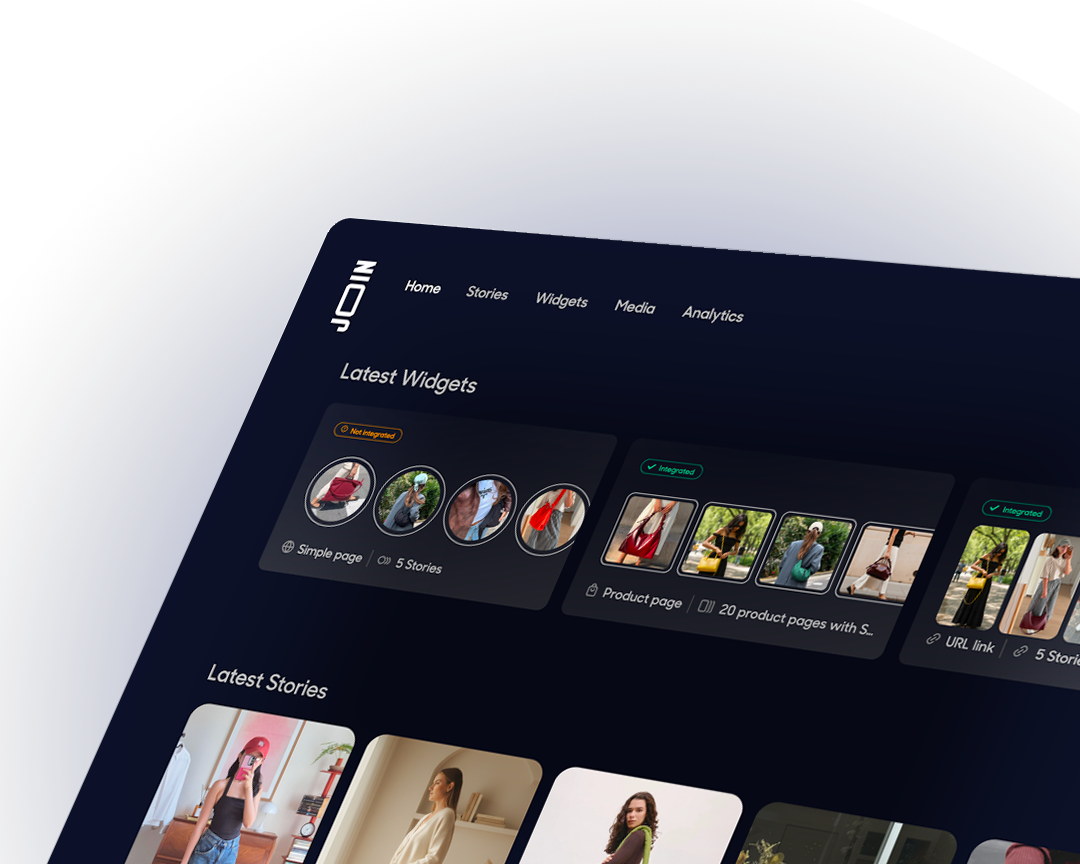
JOIN brings UGC rights management into one place, so you can:
- Send permission requests to creators from the platform.
- Track responses and see which videos have been approved.
- Find the agreed usage terms, including permitted channels and how long the rights remain valid.
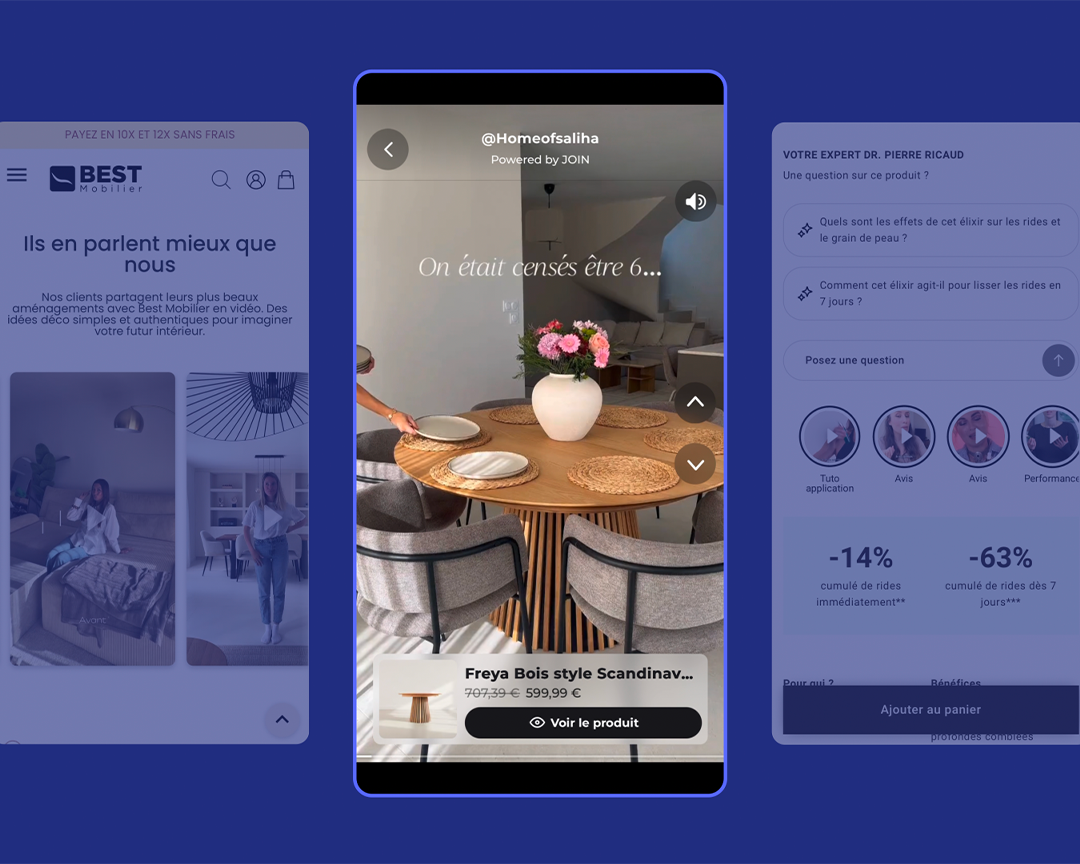
- Add approved videos to your website, including as shoppable videos on product pages.
The automation available varies by social network and post type.
You also need a process for removing videos when usage rights expire. If you rely on consent to publish personal data, you must also be able to stop publishing it when that consent is withdrawn.
Ecommerce UGC rights: frequently asked questions
Does a like give a brand permission to reuse a customer video?
A like, a “thank you” or an emoji on its own does not clearly establish permission to reuse a video. Ask for an unambiguous response to a specific request that sets out the channels, duration and terms of use.
What are the risks of using a customer video without permission?
Publishing a customer video without the necessary permissions can lead to a removal request, a formal demand or a claim for damages. If the use also breaches the GDPR, the person concerned can complain to the CNIL, France’s data protection authority.
How long does UGC permission last?
It depends on the terms the creator has agreed to. There is no single duration that applies to all UGC permissions. Specify the start and end dates, along with any renewal terms.
Can you use a public TikTok video on your ecommerce website?
A public TikTok video is not free to reuse. To copy and publish it on your ecommerce website, you need the necessary permissions from the creator and anyone identifiable in the video. Crediting the original account does not replace their agreement.
What permission do you need for a video featuring a minor?
For commercial use of a video in which a minor is identifiable, obtain permission from those with parental responsibility. Where both parents share parental responsibility, this generally means both of them. The child should also be involved in the decision according to their age and maturity. Their agreement alone is not enough.
How do you comply with the GDPR when publishing a customer video?
If someone is identifiable in the video, publishing it counts as processing personal data. You need to establish a lawful basis, inform the person, set an appropriate retention period and enable them to exercise their rights. If you rely on consent, they must be able to withdraw it at any time. Mentioning the use in your privacy policy does not, on its own, meet all these obligations.