10 Best Web Stories Platforms for Ecommerce in 2026
Web Stories have become one of the most effective ways for ecommerce brands to increase engagement, product discovery, and conversion rates.
Inspired by Instagram Stories and TikTok, ecommerce web stories bring short-form, mobile-first content directly onto online stores. Brands use them to showcase products, collections, tutorials, customer reviews, and buying guides in an interactive format that keeps shoppers engaged and moving through the purchase journey.
As consumers increasingly expect social-media-like experiences when shopping online, web stories platforms have emerged as a powerful way to recreate that engagement on owned channels. Many brands report higher product page engagement, increased add-to-cart rates, and measurable revenue growth after implementing shoppable stories across their websites.
But not all web stories platforms are built the same. Some focus on conversion optimization and product discovery, others specialize in personalization, mobile apps, or omnichannel customer experiences. Newer solutions are also incorporating AI-powered content creation, automated UGC workflows, advanced analytics, and A/B testing capabilities.
To help you choose the right solution, we compared the best web stories platforms for ecommerce in 2026 based on features, integrations, personalization capabilities, analytics, scalability, pricing, and overall value.

Quick Comparison of the Best Web Stories Platforms
The best web stories platform depends on your ecommerce stack, content strategy, traffic volume, and business objectives.
Our Top Picks by Use Case
🥇 Best Overall: JOIN
For brands looking for a complete ecommerce web stories platform that combines content creation, shoppable stories, analytics, personalization, and conversion optimization. Suitable for both growing brands and enterprise retailers, with plans starting at €79/month.
🏆 Good for Enterprise Personalization: StorifyMe
One of the most advanced stories platforms on the market, offering personalized story experiences across websites, mobile apps, email campaigns, and customer journeys.
👗 Good for Fashion & Lifestyle Brands: Pimster
Designed for visually-driven ecommerce brands looking to create immersive shopping experiences inspired by Instagram and TikTok.
📱 Good for Mobile Apps: Storyly
A leading solution for bringing Stories-style experiences directly into native mobile applications, with strong personalization and engagement capabilities.
💰 Good Budget Option: Tolstoy
An affordable entry point for Shopify merchants looking to experiment with shoppable stories and interactive content without significant upfront investment.
Now let's take a closer look at each platform and where it fits within a modern ecommerce growth strategy.
The 10 Best Ecommerce Web Stories Platforms in 2026
1. JOIN: Best Overall Ecommerce Web Stories Platform
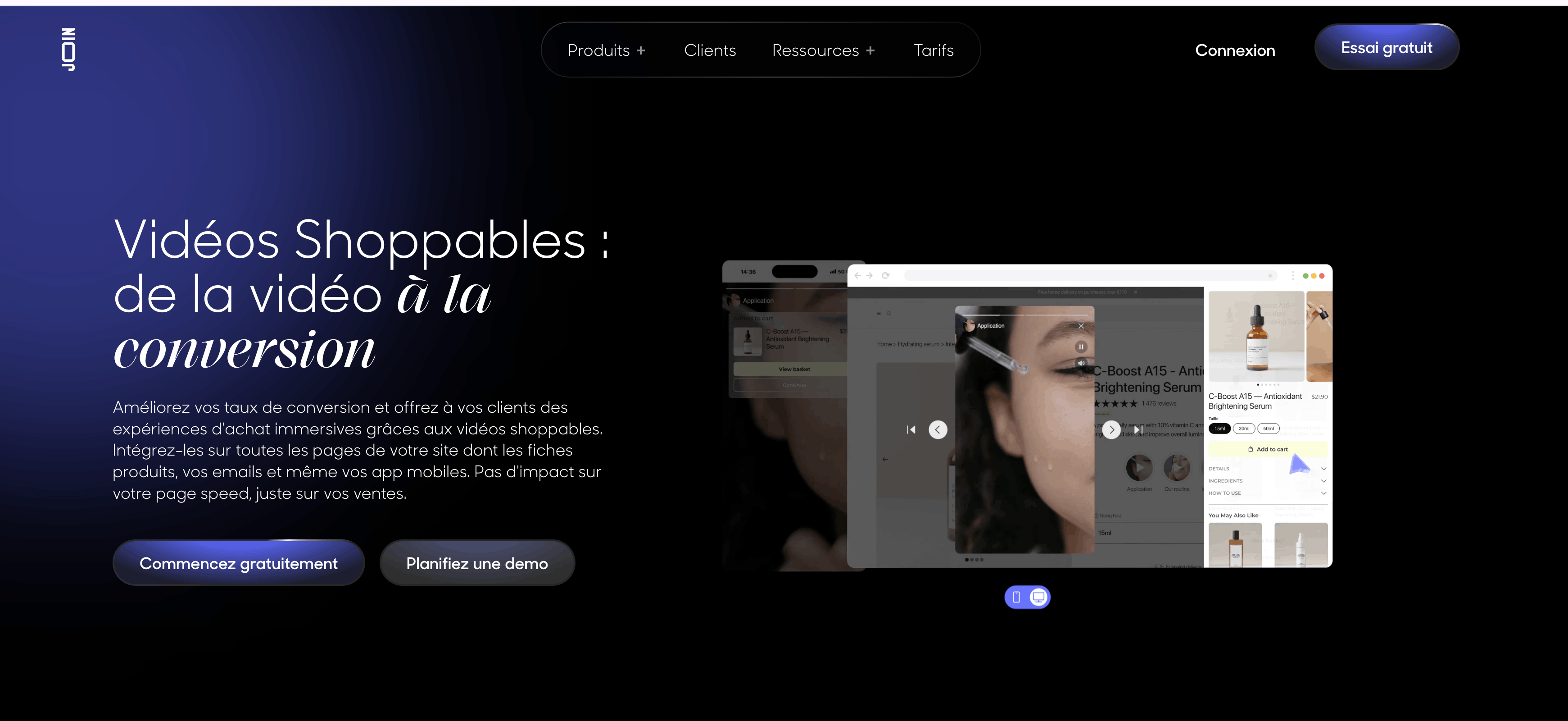
JOIN is an ecommerce web stories platform designed to help brands transform social content, product videos, and UGC into interactive shopping experiences that drive measurable revenue. Unlike traditional story widgets, JOIN combines content creation, story distribution, analytics, personalization, and conversion optimization within a single platform.
Brands can deploy shoppable stories across product pages, collection pages, homepages, landing pages, emails, and mobile experiences while measuring their impact on engagement, add-to-cart rate, and conversion rate. With AI-powered content creation, built-in A/B testing, and multi-CMS support, JOIN is designed for both growing ecommerce brands and enterprise retailers.
Key Features
- Shoppable Stories with Add-to-Cart
- AI-powered story creation
- Product tagging
- Revenue attribution and analytics
- Native A/B testing
- Shopify, Magento, PrestaShop, and custom integrations
Pros
- Strong conversion focus
- Multi-CMS compatibility
- AI-powered content workflows
- Built-in optimization capabilities
Cons
- No native live shopping functionality
Pricing
Starts at €79/month.
Our Verdict
JOIN offers one of the most complete ecommerce web stories platforms available today. By combining content creation, distribution, analytics, and optimization, it enables brands to turn stories into a measurable ecommerce growth channel rather than simply an engagement tool.
2. StorifyMe
StorifyMe is one of the most advanced stories platforms on the market, helping brands create personalized customer experiences across websites, mobile apps, email campaigns, and other digital touchpoints. The platform focuses heavily on audience segmentation, customer journeys, and dynamic content experiences.
Rather than functioning solely as a website stories widget, StorifyMe positions itself as a broader engagement and personalization platform.
Best for:
Enterprise retailers looking for personalized story experiences across multiple channels.
Key Features
- Personalized stories
- Shoppable story experiences
- Audience segmentation
- Omnichannel deployment
- Advanced analytics
Pros
- Enterprise-grade personalization
- Strong omnichannel capabilities
- Advanced audience targeting
Cons
- Custom pricing
- More complex implementation
Pricing
Custom pricing.
Our Verdict
StorifyMe is one of the strongest enterprise-focused web stories platforms available. Brands prioritizing personalization and customer journey orchestration will find it particularly compelling.
3. Pimster
Pimster helps fashion, beauty, and lifestyle brands create immersive shopping experiences inspired by Instagram Stories and TikTok. The platform focuses on visual merchandising, product discovery, and user-generated content to help brands increase engagement and conversion.
Its highly visual approach makes it especially attractive for industries where inspiration plays a major role in the buying process.
Best for:
Fashion, beauty, and lifestyle brands focused on product discovery and inspiration.
Key Features
- Shoppable stories
- UGC integration
- Product tagging
- Visual shopping journeys
- Mobile-first experiences
Pros
- Excellent user experience
- Strong visual storytelling capabilities
- Well-suited for fashion ecommerce
Cons
- Less focused on enterprise personalization
- Limited information on advanced analytics
Pricing
Custom pricing.
Our Verdict
Pimster is a strong choice for visually-driven brands looking to recreate social media shopping experiences directly on their ecommerce websites.
4. Storyly
Storyly is a mobile-first stories platform designed to bring Instagram-style story experiences directly into mobile applications. Unlike most solutions on this list, Storyly primarily focuses on increasing engagement, retention, and product discovery inside apps rather than ecommerce websites.
The platform enables brands to create personalized story feeds, promotional campaigns, onboarding experiences, and interactive shopping journeys.
Best for:
Brands with a strong mobile app strategy.
Key Features
- Interactive stories
- Personalized content feeds
- Mobile SDK integration
- Product recommendations
- Engagement analytics
Pros
- Excellent mobile experience
- Strong personalization capabilities
- Easy app integration
Cons
- Less focused on website conversion
- Not ideal for brands without a mobile app
Pricing
Custom pricing.
Our Verdict
Storyly remains one of the leading stories platforms for mobile applications and is particularly well suited for brands investing heavily in app engagement.
5. Tolstoy
Tolstoy helped popularize interactive video and stories experiences among Shopify merchants. Its simple setup, affordable pricing, and intuitive interface make it an attractive option for smaller ecommerce brands.
The platform combines stories, shoppable video, quizzes, and product recommendation flows to help merchants improve engagement and product discovery.
Best for:
Shopify merchants launching their first stories and video commerce initiatives.
Key Features
- Stories and video feeds
- Product recommendation journeys
- Interactive shopping experiences
- Shopify integration
- AI-powered content tools
Pros
- Easy to deploy
- Affordable pricing
- Beginner-friendly
Cons
- Primarily Shopify-focused
- Limited multi-platform support
Pricing
Starts at $19/month.
Our Verdict
Tolstoy is one of the easiest and most affordable ways for Shopify merchants to get started with ecommerce stories.
6. Videowise
Videowise has become one of the most recognized commerce media platforms within the Shopify ecosystem. In addition to shoppable videos, the platform supports stories-style experiences, UGC management, AI-generated content, and revenue attribution.
Its advanced analytics and Shopify-first approach make it particularly attractive for larger ecommerce brands.
Best for:
Enterprise Shopify merchants looking for advanced commerce media capabilities.
Key Features
- Stories and video feeds
- UGC management
- AI-generated content
- Revenue attribution
- Shopify integration
Pros
- Comprehensive feature set
- Strong analytics
- Advanced Shopify capabilities
Cons
- Premium pricing
- Less flexible for non-Shopify merchants
Pricing
Starts at $239/month.
Our Verdict
Videowise is one of the strongest Shopify-focused alternatives for brands looking to combine stories, video commerce, and analytics within a single platform.
7. Firework
Firework positions itself as an omnichannel video commerce platform that helps brands deploy stories and short-form content across websites, mobile apps, emails, and other digital channels.
Its enterprise focus and flexible deployment options make it particularly attractive for larger retailers.
Best for:
Enterprise brands operating across multiple channels and markets.
Key Features
- Shoppable stories
- Omnichannel deployment
- Live commerce
- UGC integration
- Enterprise analytics
Pros
- Strong omnichannel capabilities
- Enterprise-ready architecture
- Flexible deployment options
Cons
- Enterprise-focused pricing
- Longer implementation process
Pricing
Custom pricing.
Our Verdict
Firework is a strong option for enterprise retailers looking to scale stories and commerce content across multiple customer touchpoints.
8. PlayShorts
PlayShorts offers an affordable way for Shopify merchants to add stories and short-form video experiences to their websites. The platform focuses on simplicity, ease of use, and rapid deployment.
Best for:
Budget-conscious Shopify brands.
Key Features
- Stories and short-form videos
- Product tagging
- Story widgets
- Shopify integration
- Analytics dashboard
Pros
- Affordable pricing
- Easy implementation
- Simple interface
Cons
- Limited advanced features
- Primarily Shopify-focused
Pricing
Starts at €69/month.
Our Verdict
PlayShorts is a practical solution for brands looking to test ecommerce stories without investing in a more advanced platform.
9. Moast
Moast focuses on helping brands transform user-generated content into shoppable stories and social proof experiences. The platform makes it easy to import content from social media and display it across ecommerce storefronts.
Best for:
Brands with strong UGC and creator content strategies.
Key Features
- UGC story galleries
- Product tagging
- Social media imports
- Revenue attribution
- Shopify integration
Pros
- Strong UGC focus
- Affordable pricing
- Lightweight implementation
Cons
- Limited enterprise functionality
- Primarily Shopify-focused
Pricing
Starts at $15/month.
Our Verdict
Moast is a strong option for brands looking to leverage customer content and social proof within stories-based shopping experiences.
10. MakeStories
Unlike most platforms on this list, MakeStories focuses on Google Web Stories and content marketing rather than onsite ecommerce conversion. The platform helps brands create AMP-based stories that can appear in Google Search and Discover.
For publishers and content-driven ecommerce brands, this can create an additional traffic acquisition channel.
Best for:
Brands prioritizing SEO and Google Web Stories distribution.
Key Features
- Google Web Stories creation
- AMP optimization
- SEO-focused publishing
- Story templates
- Analytics integration
Pros
- Strong Google Web Stories capabilities
- SEO-focused workflows
- Easy publishing experience
Cons
- Limited ecommerce functionality
- Less focused on onsite conversion
Pricing
Custom pricing.
Our Verdict
MakeStories is a strong choice for content marketing and SEO teams looking to leverage Google Web Stories. However, ecommerce brands focused on onsite conversion will generally find more suitable alternatives elsewhere in this ranking.
Want to learn more? Check out our in-depth comparisons:
How to Choose the Right Ecommerce Web Stories Platform
When evaluating web stories platforms, focus on more than just the visual experience.
The best platforms help brands:
- Increase product discovery
- Improve conversion rates
- Reuse social content efficiently
- Measure revenue generated by stories
- Personalize story experiences
- Scale content production through AI and automation
For most ecommerce brands, stories should be evaluated as a conversion optimization channel rather than simply an engagement tool.
Frequently Asked Questions
What is an ecommerce web stories platform?
An ecommerce web stories platform allows brands to create Instagram-style story experiences directly on their websites. These stories can include videos, images, product tags, and interactive shopping features.
Do web stories increase ecommerce conversion rates?
Many brands report improvements in engagement, product discovery, add-to-cart rates, and overall conversion rates after implementing shoppable stories.
What are the best ecommerce web stories platforms?
The best platform depends on your needs. JOIN offers one of the most complete web story solutions for conversion-focused ecommerce brands, while StorifyMe and Pimster are strong alternatives for enterprise and fashion brands respectively.
What's the difference between Google Web Stories and Ecommerce Web Stories?
Google Web Stories are designed primarily for SEO and discovery through Google Search and Discover. Ecommerce Web Stories are embedded directly on websites and focus on increasing engagement, product discovery, and conversion.
{{cta}}